Most Employees Who See Misconduct Never Report It
Gallup finds 57% of employees who witnessed unethical behaviour did not report it — most often because they expected no action to be taken, or feared retaliation. Xono pairs a confidential speak-up channel with engagement tools, so concerns surface while you can still act on them.
(Gallup, Most Unethical Behavior Goes Unreported and Unresolved)
Book a Demo Take the FREE Culture Health Scan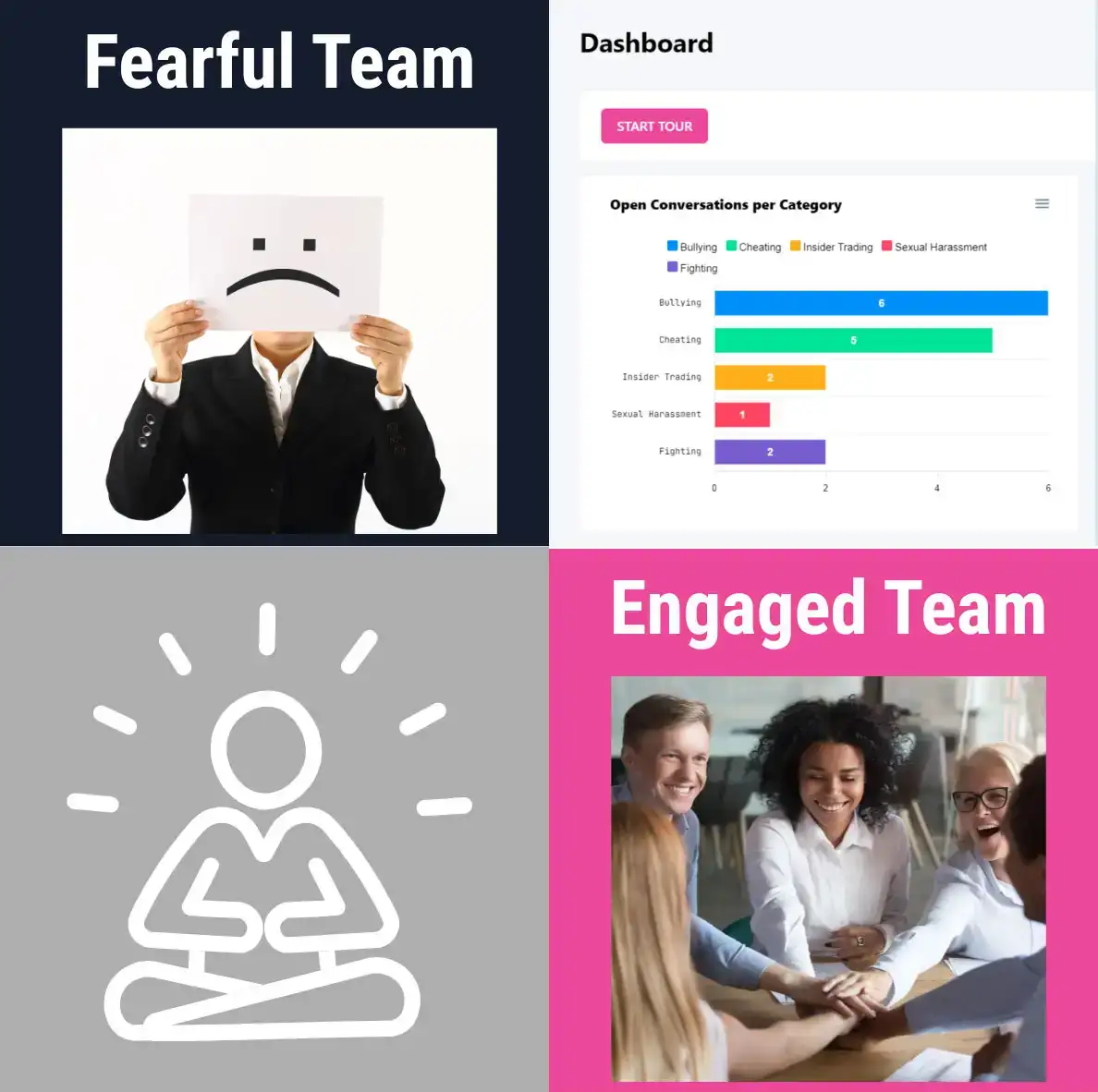
Why Employees Don’t Speak Up—And How It Hurts Employee Retention
- 22% say they thought no action would be taken (Gallup)
- 20% say they were afraid of retaliation (Gallup)
- Every lost employee costs 1.5x their salary—plus the morale of those left behind (21st Century Entrepreneurship Podcast)
- Traditional engagement surveys identify only 38% of actual workplace concerns (Forbes)
Fix the Gaps Before They Cost You Talent
The Shocking Reason Your Best Employees Quit ‘Out of Nowhere’ (And How to Stop It)
How Xono Turns Silent Teams into Thriving Ones
Step 1:
Trust-Building Rituals
Employees speak up 3x more with our psychological safety framework.
Step 2:
Dual Reporting Channels
Give people a confidential channel and a named one, so concerns surface early instead of at exit interview.
Step 3:
Leadership Accountability
Gallup finds organisations where employees feel their opinions count see a 27% reduction in turnover.
Step 4:
Continuous Measurement
Spot hidden risks in real time—before they become resignations.
You Could Have a Safer Company Culture in 3 Weeks
Week 1
Uncover hidden risks with our FREE Culture Scan.
Week 2
Train managers to listen—without defensiveness.
Week 3
Launch with 1:1 expert support for employee retention.
FAQs: Psychological Safety and Employee Retention
Q1: How does psychological safety reduce turnover?
A1: Employees who feel safe speak up early, so you can fix issues before they quit.
Q2: What are signs of poor psychological safety?
A2: Silence in meetings, high turnover, or ‘quiet quitting.’ (See the signals)